Entry · Ref JYFIFRNW
Choosing the Right Quad Bike Experience in Dubai
- Posted
- 2026-11-28
- Last amended
- 2026-11-28
- Account
- @myquadbikingdubaitips
Picking the right quad bike experience is less about chasing the biggest engine and more about matching the ride to your ability, the terrain, and the level of support you want. A good choice makes the day feel smooth from the first briefing to the last stretch back. A poor fit can feel tiring, intimidating, or simply too tame.
The process is straightforward when you break it into decisions. Start with the rider, then the route, then the machine, and only after that look at add-ons such as a desert safari or a guided tour. Each step has a few details worth checking before you commit.
Start with the rider, not the bike
Be honest about experience. A first timer does not need the most powerful quad available. They need a bike that is easy to balance, predictable at low speed, and manageable when the surface changes. Desert terrain can feel firm in one stretch and soft in the next, so control matters more than raw pace.
Children and younger riders need extra care in the selection process. Look for clear age rules, size guidance, and whether there is a separate ride area or a shorter route. If a rider is unsure about handling a quad, a passenger option or a slower vehicle may be the better starting point. Confidence grows faster when the first ride is not overwhelming.
Also consider physical comfort. Quad biking demands grip, balance, and steady steering. Anyone with wrist, shoulder, back, or knee concerns should look for a gentler route and ask about the nature of the terrain before booking. A shorter session with fewer sharp turns can be far more enjoyable than a long ride that becomes uncomfortable halfway through.
Decide what kind of day you want
Quad rides are not all built around the same experience. Some focus on open desert stretches and steady riding. Others are linked with dune bashing, camel stops, camping, or evening entertainment. The right choice depends on whether riding is the main event or one part of a wider outing.
If the ride itself is the priority, look for a route with enough variety to hold interest without becoming technical. Gentle dunes, firm tracks, and open areas give newer riders room to settle in. More experienced riders may want longer stretches, clearer acceleration, and terrain that allows better flow. Avoid choosing only by duration. A long session on a difficult route can be less satisfying than a shorter, well paced ride.
If you want a family day out, check how the route works for mixed abilities. Some operators split groups by skill level, while others keep everyone together. A split group usually feels calmer for beginners and more engaging for confident riders. When everyone rides together, the pace often has to suit the least experienced person, which can be fine if that is the expectation.
Reading the details of quad biking dubai options with that goal in mind makes comparisons easier. Two rides may look similar at first glance but feel very different once route style, group size, and riding pace are considered.
Check the safety setup before anything else
Safety should shape the decision, not sit as a final box to tick. A reliable experience starts with a proper safety helmet that fits well and stays secure. It should not rock side to side or press uncomfortably on the forehead. A helmet that is too loose can shift at the wrong moment, while one that is too tight can distract throughout the ride.
Protective gear also matters. Long sleeves, long trousers, closed shoes, and gloves help reduce scrapes, dust, and sun exposure. Eye protection is useful in sandy conditions, especially when the wind picks up. Riders should avoid loose scarves, dangling accessories, or anything that can catch on the bike.
Pay attention to the briefing. A clear introduction should cover mounting, hand signals, following distance, steering on sand, what to do if the bike slips, and how to stop safely. It should also explain the route boundaries and what riders should do if they separate from the group. If the briefing feels rushed or unclear, that is a reason to pause. Good safety habits are visible before the engines start.
Understand quad bike types in plain terms
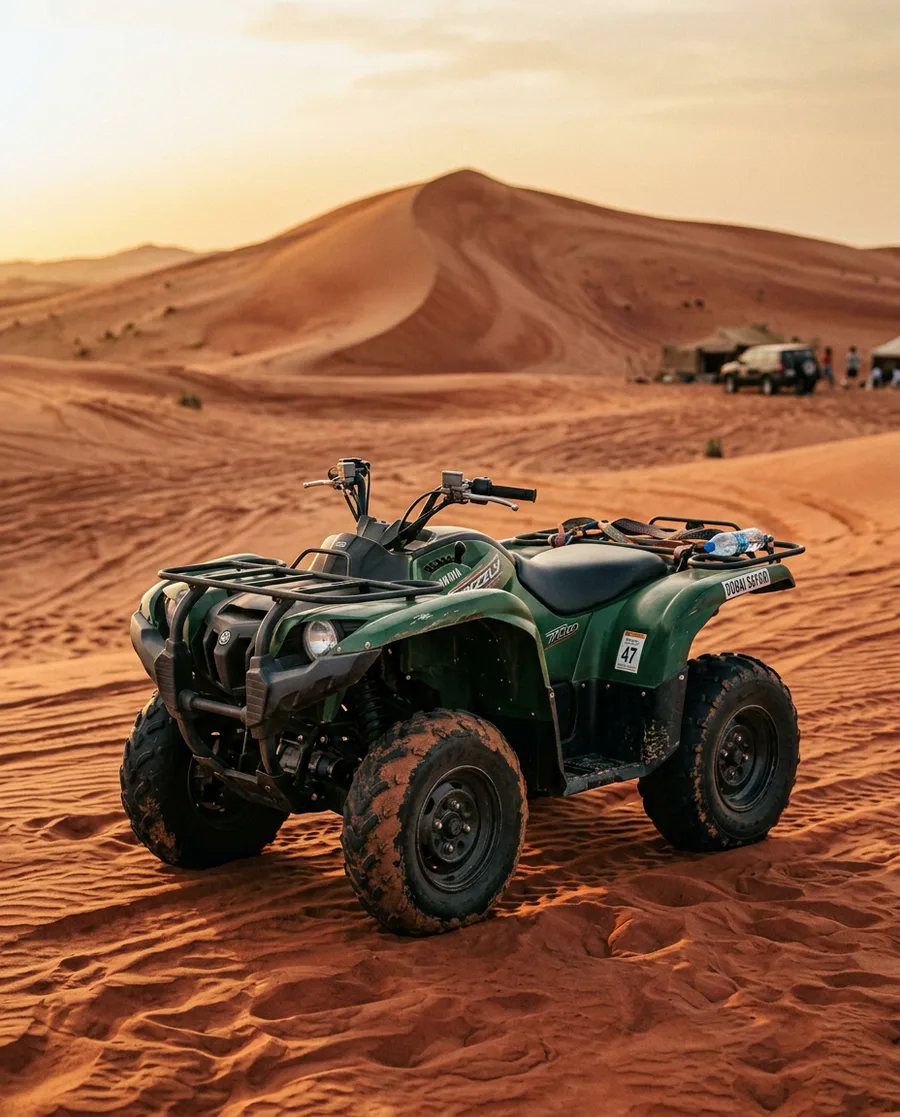
Quad bike types are often described by engine size, but labels alone do not tell the full story. A smaller automatic quad can be easier for newer riders because it keeps the controls simple. A larger quad may feel steadier over rough ground, yet it can also respond faster and demand more attention. The best choice is usually the one that feels controllable at walking pace as well as at speed.
Ask whether the bike is automatic or manual, and how the throttle responds. Automatic machines reduce the need to coordinate gears, which helps when attention is split between steering, terrain, and other riders. Manual machines can suit experienced riders who enjoy more control, but they add another skill to manage.
Size and weight matter too. A rider should be able to sit with both feet supported and reach the handlebars without stretching. The bike should feel balanced when stationary. If the fit looks awkward before the ride begins, it is unlikely to improve on sand.

When comparing quad bike types, focus on control, comfort, and the route rather than speed alone. Fast riding on unsuitable terrain is not a shortcut to a better experience. Smooth control usually makes the ride feel more polished and far more enjoyable.
Look closely at the route and terrain
Desert terrain changes through the day. Cooler sand can feel firmer, while hot, loose sand can make steering heavier and acceleration less direct. Routes that include steep dunes need more judgment, especially for riders who have not ridden on sand before. A route with gentle climbs, wide turns, and clear visibility is a better starting point.
Ask how the route is marked and how riders stay together. In open desert, clear guidance is essential. A guided tour can help by setting a steady pace, pointing out tricky sections, and keeping the group on the intended path. This is especially useful for visitors unfamiliar with desert conditions.
Check whether there are sections shared with other vehicles. Dune bashing and riding are not the same experience. A route shared with fast-moving off road vehicles may feel less relaxed for a beginner. A quieter riding area gives newcomers more space to learn and lets confident riders enjoy the flow without constant interruption.
Set realistic expectations about speed and rules
Speed limits and route rules exist because sand riding can change quickly. A clear path can become soft without warning, and another rider may be just beyond a crest. Good riders keep enough space to react. They avoid sudden turns, stay within marked boundaries, and follow the pace set for the group.
Before choosing a ride, ask what happens if someone rides above the set pace or leaves the route. The answer says a lot about how well the day is managed. Clear rules protect everyone and help the ride feel organised rather than chaotic.
It also helps to understand that a smoother ride is not necessarily a slow ride. On sand, steady momentum often works better than sharp bursts of speed. Riders who listen to the guide and keep their movements calm usually get more from the route than those who try to force the bike through difficult sections.
Compare the full experience, not just the vehicle
Once the riding basics are clear, look at the rest of the outing. Transport, briefing time, riding time, rest stops, and any linked activities all shape the day. A ride that looks short on paper may feel full if it includes a careful briefing, photo stops, and time to settle between sections.
Check what is included and what is expected from the rider. Some experiences pair quad riding with a desert safari, which changes the pace and the type of clothing that makes sense. If the day ends with dinner or entertainment, dust protection and a change of layer may be useful. If the focus is riding, keep the plan simple and give the activity your full attention.
Group size is another practical detail. Smaller groups often allow clearer instructions and more space on the route. Larger groups can still work well when they are organised and split by ability. What matters is whether the riding area feels controlled and whether each rider understands the plan.
Make the final choice with a calm check
Before settling on a quad biking dubai experience, run through the decision in a practical order. Can each rider handle the proposed bike? Does the route match the group's ability? Are helmets, guidance, and riding rules handled clearly? Is the wider day built around the kind of experience you want? If those answers feel solid, the choice is likely a good fit.
A useful final check is to imagine the least confident rider in the group on the route. If that person would feel supported, the outing is likely well matched. If the plan only works for the strongest rider, look for a slower option or a split route. The right quad ride leaves room for enjoyment, not just endurance.
The best pick is rarely the one with the loudest claims. It is the one that fits the riders, respects the terrain, and makes safety part of the experience from start to finish. When those pieces line up, the day feels easier to follow and much more rewarding.